
Keratoconus Treatment in London
Home of the Ghabra Technique and leading-edge keratoconus treatments tailored to every stage of the disease. We offer a full spectrum of personalised treatments to slow progression and restore vision in patients with keratoconus—from early-stage management to complex surgical care.
What Is Keratoconus?
Keratoconus is a progressive eye condition where the cornea thins and bulges into a cone shape, distorting vision over time. Early diagnosis and intervention are key to halting its development and avoiding vision loss. Our clinic specialises in both diagnosis and treatment, offering the full range of medical and surgical solutions.
Common Symptoms
Common Symptoms Include:
- Frequent changes in glasses or contact lens prescription
- Halos, glare, or ghosting around lights
- Eye rubbing or persistent itchiness (especially with hayfever)
- Blurred, distorted, or fluctuating vision
Related Conditions
- Allergic eye disease
- Irregular astigmatism
- High myopia in young patients
- Hormonal triggers in adolescence or pregnancy
Sub-Conditions
- Early-stage keratoconus
- Progressive keratoconus
- Contact lens intolerance
- Advanced keratoconus with corneal scarring
Is Keratoconus Affecting Your Vision?
If you’re living with unpredictable or worsening eyesight, these challenges may be familiar:
- Seeing halos, glare, or ghosting around lights
- Constantly needing stronger prescriptions
- Discomfort or difficulty wearing contact lenses
- Eye rubbing due to itchiness or allergies
- Being told there’s no treatment beyond contact lenses
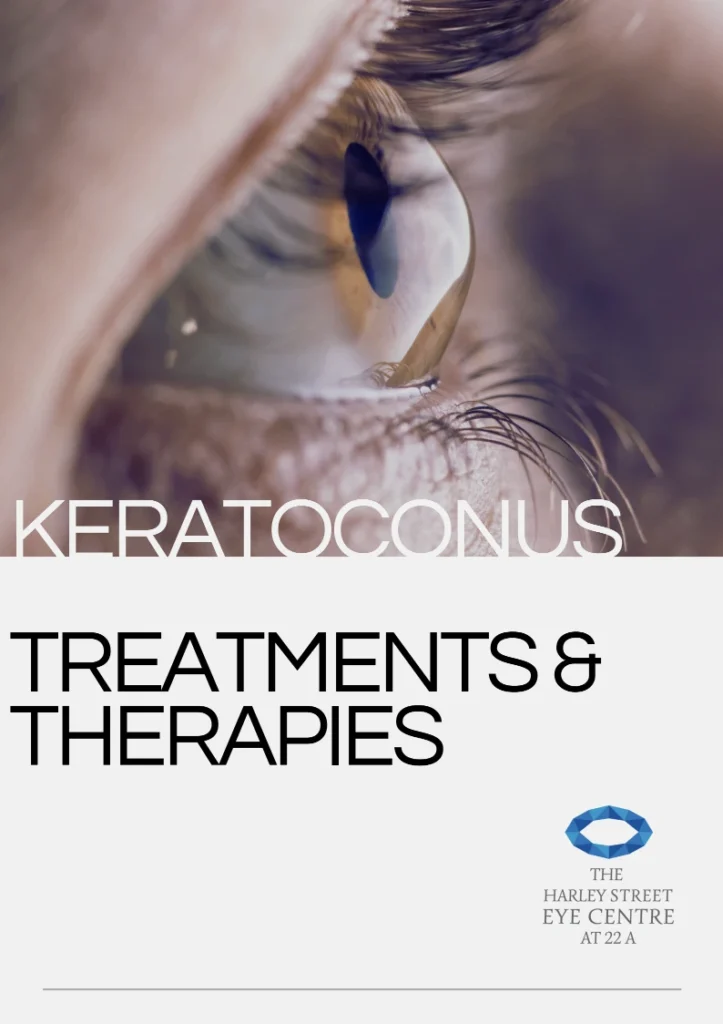
Download The Keratoconus Information Pack
Our Approach
Led by Mr. Marwan Ghabra—a distinguished ophthalmic surgeon with over 30 years of experience and creator of the innovative “Ghabra Technique” for keratoconus treatment —our team focuses on understanding your unique vision goals.
At The Harley Street Eye Centre, we prioritise early detection—particularly in patients with high myopia or astigmatism—where laser surgery may still be an option. Once diagnosed, we stage the condition and assess for underlying causes such as hormonal shifts or habitual eye rubbing. As keratoconus specialists, we offer a comprehensive plan to both stabilise the cornea and enhance visual quality, including our own innovation: The Ghabra Technique.
Years helping people see better
Patients treated
Years of experience for our lead surgeon
Types Of Treatment
Explore our dual-focus treatments that halt keratoconus progression while also enhancing vision. Depending on your needs and disease stage, our specialists may recommend:
- Corneal Cross-Linking – Strengthens corneal structure to stop progression
- Topography-Guided Laser Treatment – Reshapes the cornea to reduce irregularity
- Xenia Collagen Implant + Ghabra Technique Implantation – A minimally invasive implant that provides biomechanical support
- Corneal Ring Segments (ICRS) – Inserted into the cornea to flatten and reshape its curve
- ICL (Implantable Collamer Lens) – Corrects vision for patients unsuitable for laser
- Corneal Transplant – For severe or scarred keratoconus cases
About Mr Marwan Ghabra
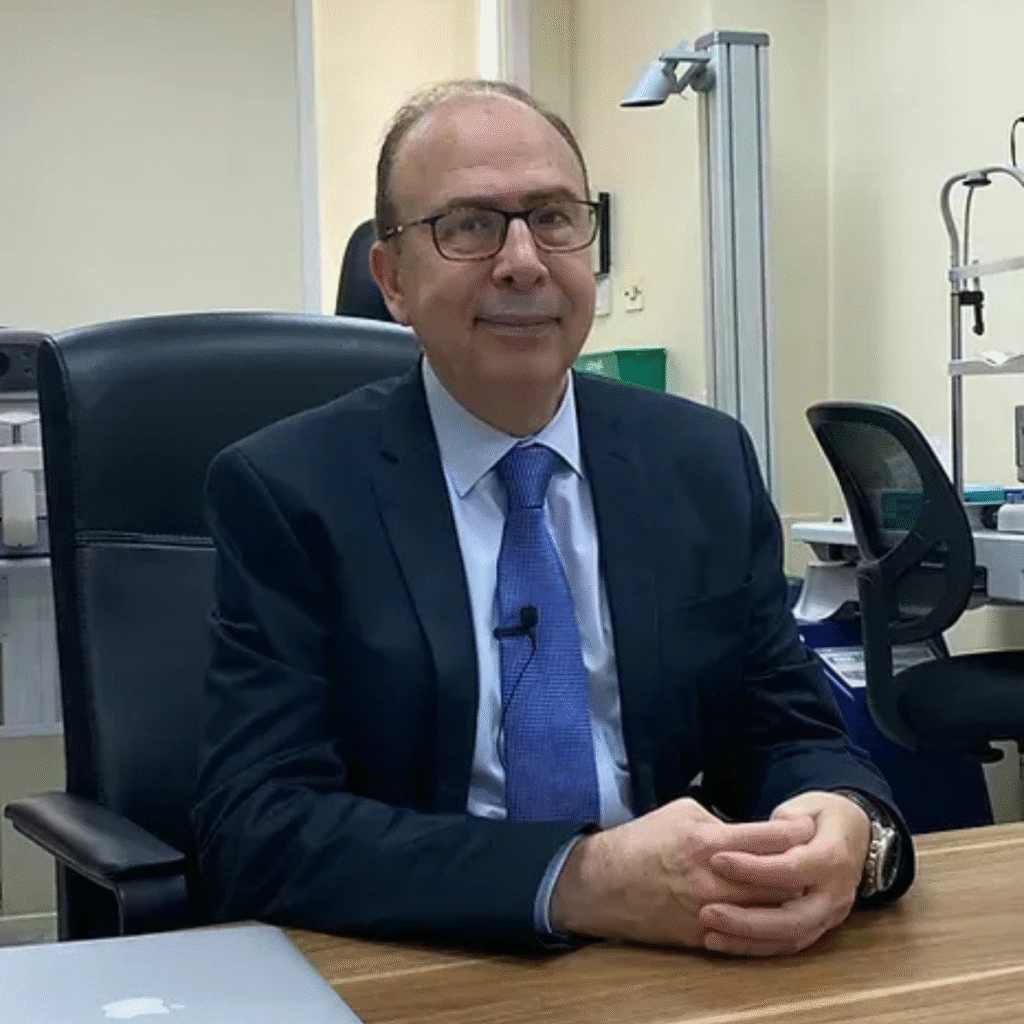
Inventor of the Ghabra Technique and Medical Director at The Harley Street Eye Centre
Mr Marwan Ghabra is a pioneering ophthalmic surgeon whose innovative work in keratoconus care led to the creation of the Ghabra Technique implantation model. As the Medical Director of The Harley Street Eye Centre, he has transformed the treatment landscape for patients with keratoconus by developing a tailored, minimally invasive approach using the Xenia collagen implant.
He is also a founder of MAG Optics, a Boston-based medical device company specialising in advanced technologies for keratoconus treatment.
His dedication to early diagnosis and biomechanical corneal support has redefined modern management of keratoconus, particularly in cases unsuitable for conventional refractive or transplant surgery.
To learn more about his work and philosophy, visit: www.marwanghabra.com
Which Treatment Is Right For You?
| Criteria | Cross-Linking | Topo-Guided Laser |
|---|---|---|
| Mild to moderate keratoconus | ✅ | ✅ |
| Stable vs. progressive disease | ✅ | ❌ |
| Corneal thickness within safety limits | ✅ | ✅ |
| Age over 16 | ✅ | ✅ |
| Desire to improve unaided vision | ❌ | ✅ |
International Patients
We welcome patients from across the globe seeking expert keratoconus care. Our team provides fast-track diagnostics and tailored treatment programmes during your time in London, with full reports and virtual follow-up support.

How Much Does Keratoconus Treatment Cost?
We provide transparent pricing and customised treatment plans following your initial consultation. Detailed breakdowns are available during your diagnostic appointment.
Comprehensive
Eligibility
Assessment
From
£1,800
Per Eye
Flexible
Installments
0% Interest
Keratoconus: FAQ — Treatments & What to Expect
Understanding Keratoconus & Treatment Options
What is keratoconus, and how does it affect vision?
Keratoconus is a progressive condition in which the cornea (the clear, front surface of the eye) becomes thinner and begins to bulge into an irregular, cone-like shape. This deformation distorts the way light enters the eye, leading to blurred vision, irregular astigmatism, ghosting, glare, and often rapidly changing prescriptions. Because the cornea’s shape changes over time, standard glasses often struggle to provide consistent, clear vision.
Why is early diagnosis important in keratoconus?
Early diagnosis enables timely intervention to stabilise the cornea before it becomes more irregular or thin. Treatments that slow or halt progression — if started early — can help preserve corneal structure, reduce the risk of more invasive surgery later, and improve long-term visual outcomes.
What treatment approaches does The Harley Street Eye Centre offer for keratoconus?
The Centre provides a full spectrum of care tailored to each stage of the disease. Options include:
- Corneal collagen cross-linking (CXL) to stabilise the cornea.
- Specialist contact lens fitting (e.g., scleral, rigid, hybrid lenses) to optimise vision with an irregular cornea.
- Advanced procedures including a novel method developed in-house (the “Ghabra Technique”) for corneal reinforcement and treatment of irregularity.
- For advanced cases: corneal transplant surgery (partial or full thickness) when other treatments are no longer sufficient.
Corneal Stabilisation & Vision Correction
What is corneal collagen cross-linking (CXL) and how does it help?
CXL is a minimally invasive procedure that strengthens the corneal collagen fibres, helping to “lock in” the cornea’s shape and prevent further bulging or thinning. It uses a combination of a photosensitive solution (riboflavin) and ultraviolet-A (UVA) light to induce biochemical changes in the cornea, increasing its stiffness and structural stability.
When is CXL most effective?
Does CXL restore perfect vision?
No — CXL stabilises the cornea and prevents further worsening, but it does not reverse existing irregularities or fully restore “normal” corneal shape. Many patients will still need glasses or specialist contact lenses to correct their vision even after CXL.
Vision Correction With Lenses & Other Treatments
What role do specialist contact lenses play in keratoconus treatment?
Custom-designed contact lenses (rigid gas permeable, scleral, hybrid) can vault over or smooth out the irregular corneal surface to create a new optical surface — often significantly improving visual clarity compared to standard glasses. They are frequently used when the cornea is stable (after CXL or in milder cases) to provide optimal vision.
What are intracorneal ring segments (ICRS), and how can they help?
ICRS are small, crescent-shaped plastic or polymer segments surgically implanted into the corneal stroma. Their purpose is to reshape and flatten the cone-shaped cornea, reducing irregular curvature and improving structural regularity. For some patients, this results in reduced distortion and improved optics — often used in combination with CXL or as part of a customised treatment plan.
What is the “Ghabra Technique” offered at The Harley Street Eye Centre?
The “Ghabra Technique” is a proprietary, advanced keratoconus treatment developed at the Centre. It involves placing a collagen (or “Xenia”) implant into a femtosecond-laser created corneal pocket — designed to enhance corneal thickness, strengthen biomechanics, and improve stability. According to the Centre, this method can reduce regression, minimise the need for corneal transplantation, and address irregularities even on the back surface of the cornea.
Advanced & Surgical Treatments
When might a corneal transplant be necessary?
What should one expect after a corneal transplant?
Recovery can be slower and more delicate than non-surgical options. Visual rehabilitation may take months, and many patients will still need glasses or contact lenses for optimal vision. Ongoing follow-up and care (e.g. medication, monitoring for rejection) are essential
Suitability, Prognosis & Patient Experience
Who is suitable for keratoconus treatments like CXL, rings, or the Ghabra Technique?
Suitability depends on multiple factors: corneal thickness and shape, disease stability or progression, age, overall ocular health (e.g. no active infection or severe scarring), and the extent of irregularity. The Centre assesses each case individually and tailors a treatment plan accordingly.
Can keratoconus be completely “cured”?
There is no cure in the sense of returning the cornea to a completely normal, pre-disease state for all patients. The main goal of modern treatments is to halt progression, improve structural stability, and optimise vision. For many patients, a combination of treatments can deliver stable, functional vision — though lifelong monitoring may still be recommended.
What are realistic expectations after treatment?
If treated early and appropriately:
- Disease progression may be stopped (via CXL or similar)
- Vision may improve significantly (with contact lenses, rings, or custom treatment)
- In advanced cases, transplant may restore corneal integrity
However: secondary effects (e.g. need for special lenses, potential long-term follow-up) should be understood. The goal is stabilisation and functional vision — not necessarily perfect vision.
Why choose The Harley Street Eye Centre for keratoconus treatment?
Because the Centre offers a full spectrum of carefully selected, modern, and advanced treatments — from non-surgical stabilisation and contact lens care to cutting-edge techniques (like the Ghabra Technique) and surgery when needed. Each patient’s care begins with detailed diagnostics, personalised planning, and specialist-led follow-up. This holistic, flexible approach ensures that you receive treatment suited exactly to your eyes and lifestyle.
Your Patient Journey
At Harley Street Eye Centre in London, your care is consultant-led and tailored to your vision, lifestyle and goals. From first enquiry through consultation, diagnosis and treatment, we explain every step in plain language and agree a plan together. Our clinic at 22a Harley Street combines advanced diagnostics and modern laser/surgical technology with clear aftercare and long-term monitoring where needed (e.g., keratoconus, glaucoma, retina). Use the tabs to see what happens at each stage — from booking to recovery — and what to expect on the day. When you’re ready, book a consultation or call our team.
We’re here to listen first. Tell us what’s bothering you, how it affects your day, and what you’d like to achieve. Our team will guide you to the most suitable consultant and appointment type at Harley Street Eye Centre.
- Share your symptoms, history and goals
- Quick suitability check for key treatments
- Advice on records to bring (glasses Rx, letters, scans)
- Appointment scheduled at a convenient time
- Clear confirmation with directions and next steps
We’re excited to see you at your appointment. Ask us anything — about treatments, the clinic, timings or fees. Our goal is to help you regain your independence and live life free from visual limitations.
- Discuss your eye health goals and lifestyle needs
- Full eye examination by a consultant ophthalmologist
- Vision testing and treatment eligibility assessment
- Diagnostic scans if required (e.g., OCT, topography, biometry)
- Start a personalised treatment plan and timeline
After reviewing your results, your consultant explains the findings in plain language and outlines safe, evidence-based options. You’ll make an informed decision together.
- Clear explanation of your diagnosis and prognosis
- Side-by-side comparison of suitable treatments (incl. non-surgical)
- Benefits, risks and expected recovery times discussed
- Transparent pricing and payment options explainedWritten summary of the agreed plan
You’ll be welcomed by our clinical team, who will conduct final checks and ensure your comfort throughout. Most procedures are quick with minimal downtime.
- Arrival, consent review and last-minute questions answered
- Pre-op measurements confirmed; anaesthetic drops if needed
- Consultant-delivered procedure using modern technology
- Immediate post-op checks and tailored aftercare instructions
- Safe journey-home guidance and contact details for support
Good outcomes rely on good aftercare. We’ll review your progress, fine-tune any medications as needed, and be available to provide advice if you require it between visits.
- Scheduled follow-ups to monitor healing and vision
- Symptom checklist and when to get in touch
- Medication/use of drops reviewed and adjusted
- Activity guidance (work, driving, exercise, screen time)
- Direct access to our team for reassurance and queries